

Exercise, even when using exercise bikes, can be too rigorous for some people. Recumbent bikes allow for low-impact cardio that doesn’t trigger knee, back, and other joint issues. Plus, the best recumbent bikes in Canada give you a great way to keep exercising in the winter, when cycling outdoors is simply impossible because of snow and ice. The bikes we’ve highlighted here are easy to use, gentle on your joints, and can help give you a steady entry back into low-impact workouts.
What We Looked For
The best recumbent bikes in Canada have some of the same features as other exercise bikes. We looked for options that track a wide range of metrics, including speed and calories burned. We also wanted to present options that have built-in programs alongside those that allow for quick, easy workouts or warmups without any guidance. There’s an option here for you, no matter what features you need in a recumbent bike.
Best Recumbent Bikes in Canada: Our Best Gift Picks
1. Niceday Recumbent Exercise Bike
2. Marcy Magnetic Recumbent Bike
3. CHAOKE Recumbent Exercise Bike
4. Marcy Personal Exercise Bike
5. Schwinn 230 Recumbent Bike Series
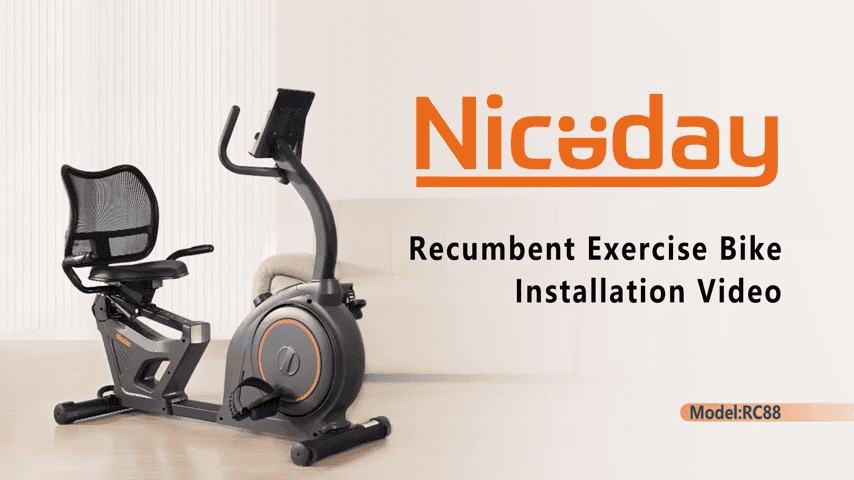
Best overall recumbent bike in Canada: Niceday Recumbent Exercise Bike
Pros:
- Magnetic resistance with 16 adjustable levels for smooth, quiet movement
- Ergonomic seat with breathable mesh backrest and multiple adjustment points
- High 181.44 kg weight capacity with a solid alloy steel frame
- LCD monitor tracks core workout data
Cons:
- Mechanical resistance is limiting when it comes to advanced training metrics
The Details:
- Frame Material: Alloy Steel
- Resistance Type: Magnetic
- Resistance Levels: 16
- Power: Battery
- Tracked Metrics: Distance, Heart Rate, Speed, Time, Calories, Pulse
The Niceday Recumbent Exercise Bike is a low-impact bike that prioritizes back support and joint comfort. It fits particularly well into recovery-focused routines where consistency and stability are the focus as much as movement. The magnetic resistance system is quiet and allows you to gradually increase resistance for greater effort.
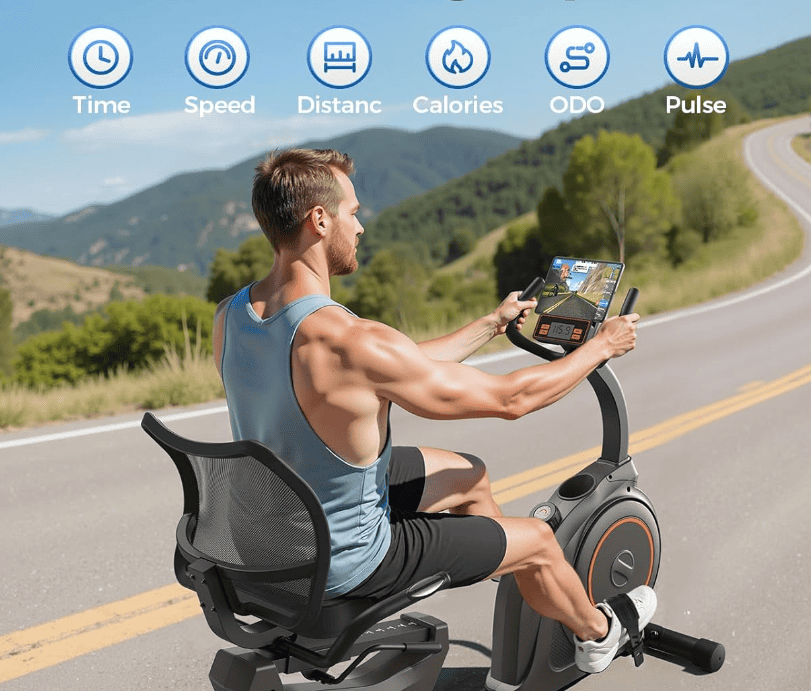
A 6.8 kg flywheel works with 16 resistance levels to deliver smooth transitions between intensity settings. This setup supports slower rehabilitation sessions as well as longer, relaxed rides without sudden jumps in resistance. The bike’s 181.44 kg weight capacity adds a sense of security, especially for users who want a stable platform rather than a lightweight frame. An LCD display tracks time, speed, distance, calories, and pulse, offering useful feedback without crowding the screen.
Comfort is a clear design focus. The padded seat and ventilated backrest provide support without feeling rigid, and the adjustable seat positions help dial in proper leg extension. At roughly 40.4 kg, the bike feels substantial, though transport wheels make it possible to shift when needed.
This bike isn’t built for high-intensity spin workouts or app-driven training plans. Riders who want performance analytics or competitive programming may find it limited. It fits better in routines centred on quiet operation, steady pacing, and joint-friendly movement, where comfort supports long-term consistency.
Our Expert Opinion: “The Niceday Recumbent Bike is stable and comfortable, even though it lacks some of the deeper features of other models. It’s great for repeatable, sustainable workout routines that are the hallmark of recovery goals.”
Customers Are Saying: “This bike is very comfortable and feels sturdy. After a couple of weeks of use, I’m loving getting in some exercise each day.”
Who is the Niceday Recumbent Exercise Bike for?
- Users recovering from injury. The low-impact and no-pressure design is great for those who are recovering from injuries.
- Canadians who need low-impact indoor cardio. This indoor bike helps you avoid snowy and icy sidewalks while still allowing you to get your workout in.
- Those who need a higher weight capacity for their exercise bike. The higher weight capacity is great for those who need a more stable bike.
Who should avoid the Niceday Recumbent Exercise Bike?
- Athletes who need high-intensity training. Those who want high-intensity training may need a bike with more resistance options.
Instead, choose… the CHAOKE Recumbent Exercise Bike.
The Chaoke Recumbent Exercise Bike offers more room to increase resistance over time. You can follow app-guided sessions, too, but you’ll give up Niceday’s heavy-duty frame. The broader resistance may be better for some Canadians regardless.
Features Breakdown
- Frame Material: Alloy Steel
- Resistance Type: Magnetic
- Resistance Levels: 16
- Power: Battery
- Tracked Metrics: Distance, Heart Rate, Speed, Time, Calories, Pulse
- Weight Capacity: 181.4 kg
- Dimensions: 127 x 58.42 x 114.3 cm
- Adjustment Points: Pedals, Seat
- Programs: None
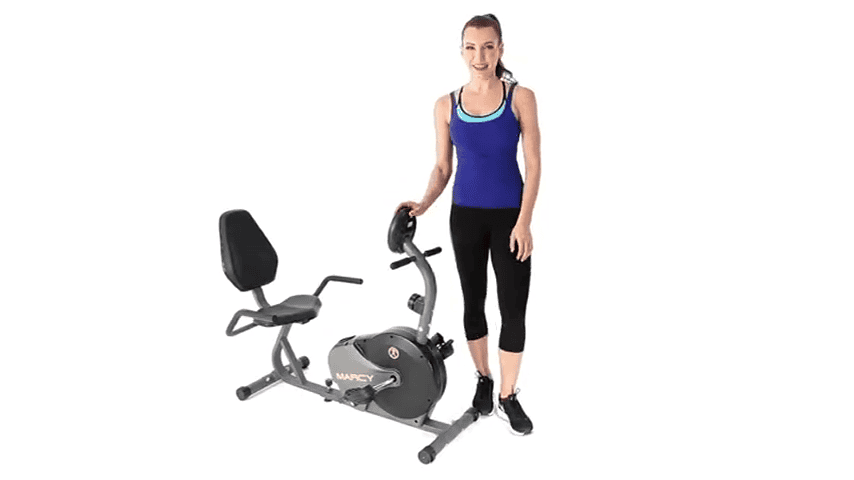
Best beginner recumbent bike in Canada: Marcy Magnetic Recumbent Bike
Pros:
- Magnetic resistance with eight preset levels
- Adjustable seat and padded backrest for relaxed pedaling
- LCD screen with key workout metrics
- Lightweight frame that includes transport wheels
Cons:
- The manual resistance knob limits more precise adjustment
The Details:
- Frame Material: ABS
- Resistance Type: Magnetic
- Resistance Levels: 8
- Power: Battery
- Tracked Metrics: Speed, Distance, Time, Calories
The Marcy Magnetic Resistance Recumbent Bike is aimed at people who want comfortable, low-impact cardio without complicated setup or controls. It fits well into beginner routines or situations where easing back into regular movement is the priority. Magnetic resistance keeps the ride controlled and quiet, and the step-through frame reduces awkward mounting.
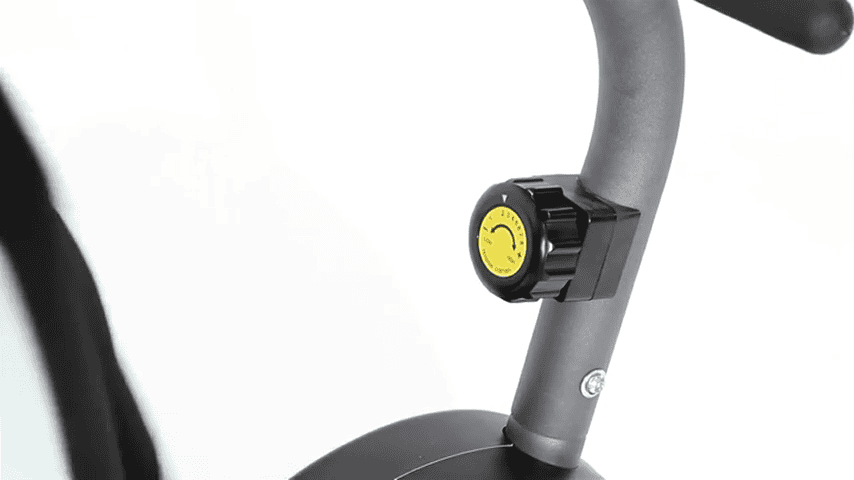
Resistance is handled through eight preset levels, covering a gentle range that supports steady rides rather than strength-focused intervals. The LCD screen tracks time, speed, distance, calories, and odometer readings, giving enough feedback to follow progress without becoming a distraction. Foam-covered handlebars provide a stable place to rest your hands during longer sessions.
The bike’s lighter build changes how it fits into a home space. At roughly 18.6 kg, it’s easier to reposition than heavier recumbent bikes, and the transport wheels help when it needs to be moved out of the way. The padded seat and backrest offer consistent support for slower, longer rides where posture matters more than intensity.
This bike isn’t built for high resistance or long-term progression toward harder training. Heavier or taller riders may find the frame less confidence-inspiring than sturdier models. It works better for users who value comfort, quiet operation, and straightforward controls over resistance depth or advanced features.
Our Expert Opinion: “Marcy’s approach here prioritizes accessibility. The lighter frame, simple resistance system, and clear display make it easier to build a routine without feeling overwhelmed by settings or setup.”
Customers Are Saying: “The resistance is just enough for recovery, but it doesn’t go much higher. It’s comfortable for longer periods, and it’s quiet enough that I can watch TV at the same time.”
Who is the Marcy Magnetic Recumbent Bike for?
- People who are starting low-impact cardio at home. If you’re just starting with low-impact cardio, this is a great beginner’s bike.
- Those who want clear controls and uncomplicated tracking. The controls are easy to use, and the tracking isn’t complicated or difficult to understand.
- Canadians who need a bike that is easy to store. This bike can be stored away when not in use to save floor space.
Who should avoid the Marcy Magnetic Recumbent Bike?
- Users who need structured training programs. This bike doesn’t come with any structured training programs, so those who need that will need to look elsewhere.
Instead, choose… the Marcy Personal Exercise Bike.
If getting on and off the bike is a bigger concern than portability, the Marcy Personal Exercise Bike may be a better choice. It’s a heavier bike that isn’t as easy to move around, but the step-through design and easy-to-read display make it accessible.
Features Breakdown
- Frame Material: ABS
- Resistance Type: Magnetic
- Resistance Levels: 8
- Power: Battery
- Tracked Metrics: Speed, Distance, Time, Calories
- Weight Capacity: 136.1 kg
- Dimensions: 142.3 x 63.5 x 99 cm
- Adjustment Points: Seat
- Programs: None
Best compact recumbent bike in Canada: CHAOKE Recumbent Exercise Bike

Pros:
- 16 levels of magnetic resistance
- App compatibility for guided workouts and virtual riding
- Adjustable seat and vertically adjustable backrest
- 163.29 kg weight capacity in a stable frame
Cons:
- App features require a separate device and compatible third-party apps
The Details:
- Frame Material: Alloy Steel
- Resistance Type: Magnetic
- Resistance Levels: 16
- Power: Battery
- Tracked Metrics: Time, Speed, Distance, Calories Burned, Heart Rate
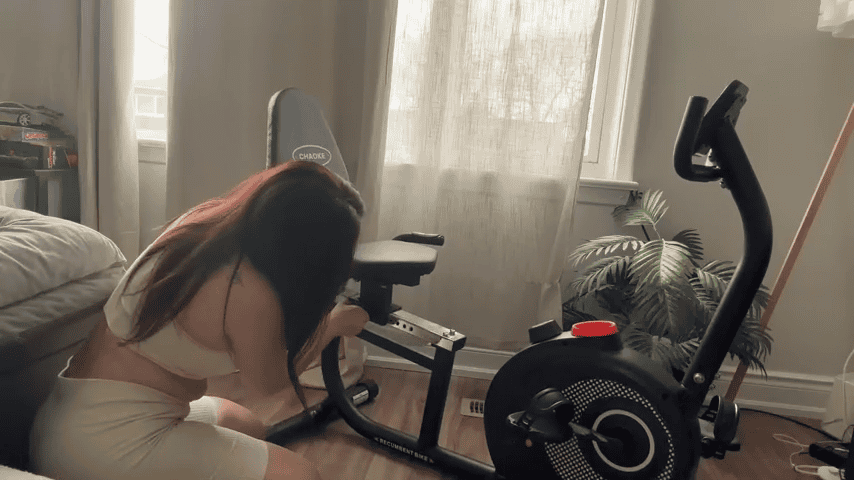
The CHAOKE Recumbent Exercise Bike targets home riders who want low-impact cardio with more progression than basic comfort models provide. It keeps the reclined, joint-friendly riding position of a recumbent bike while offering a wider resistance range for users who expect their fitness to change over time.
Sixteen magnetic resistance levels allow effort to increase gradually, moving from gentle conditioning into more demanding rides without abrupt jumps. The belt-driven system keeps pedalling quiet and consistent, which works well in shared living spaces. An LCD monitor displays time, speed, distance, calories, and heart rate, while the tablet holder keeps training apps or entertainment within view when connected.
Adjustability plays a central role in how this bike fits different riders. The seat slides forward and back, and the backrest adjusts vertically, helping support different leg lengths and riding postures. At roughly 26.99 kg, the frame feels planted during use, and transport wheels make it easier to shift once a session is finished.
This bike asks a bit more from the rider in return for that flexibility. Guided sessions and variety depend on external apps rather than built-in programs, which won’t appeal to users who want a fully self-contained console. It fits better for people who like adjusting their setup, tracking progress, or following structured rides through an external device.
Our Expert Opinion: “This CHAOKE bike is more than a basic comfort model, but doesn’t quite match the features in feature-heavy trainers. It has a wider resistance range and adjustability to help you grow. CHAOKE positions this bike between basic comfort models and more feature-heavy trainers. The wider resistance range and adjustability make it easier to grow into, especially for households where fitness needs aren’t static.”
Customers Are Saying: “This bike is so quiet. I can hardly hear it when I’m pedaling, so it’s great for watching TV at the same time. Plusi t was really easy to assemble.”
Who is the CHAOKE Recumbent Exercise Bike for?
- Those who want low-impact cardio with room to improve. The wealth of magnetic resistance levels here gives you plenty of options for low-impact cardio that improves with your ability.
- Canadians who like following app-guided workouts. This bike can connect to third-party exercise apps to track progress and provide app-guided workouts.
- Users who need higher weight support in a compact bike. The higher weight support makes this bike surprisingly sturdy for being so compact.
Who should avoid the CHAOKE Recumbent Exercise Bike?
- Those who don’t need to track data. If you don’t want to track data, this metric-focused bike might not be right for you.
Instead, choose… the Schwinn 230 Recumbent Bike.
The Schwinn 230 Recumbent Bike offers structured guidance built directly into the console rather than relying on external apps. You trade flexibility and a simpler frame for built-in programs and a more directed training experience.
Features Breakdown
- Frame Material: Alloy Steel
- Resistance Type: Magnetic
- Resistance Levels: 16
- Power: Battery
- Tracked Metrics: Time, Speed, Distance, Calories Burned, Heart Rate
- Weight Capacity: 163.29 kg
- Dimensions: 111 x 63.5 x 101 cm
- Adjustment Points: Seat, Backrest
- Programs: Available with Third-Party Apps
Best large display recumbent bike in Canada: Marcy Personal Exercise Bike
Pros:
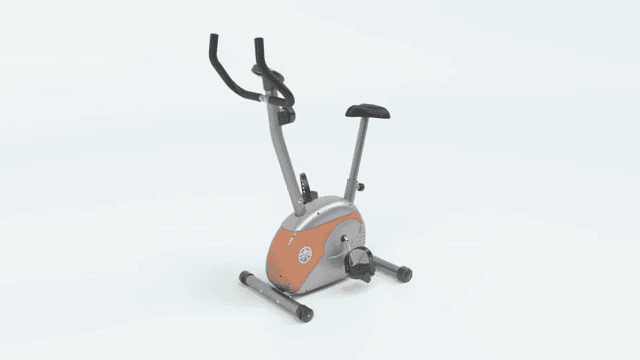
- Step-through frame reduces strain on your knees and lower back
- Magnetic resistance with eight levels for quiet, controlled pedalling
- Padded seat, foam-covered handles, and strap-adjustable pedals
- Large LCD screen displays metrics that are easy to read
Cons:
- 110 kg maximum user weight
The Details:
- Frame Material: Alloy Steel, Plastic
- Resistance Type: Magnetic
- Resistance Levels: 8
- Power: Battery
- Tracked Metrics: Time, Speed, Distance, Calories Burned
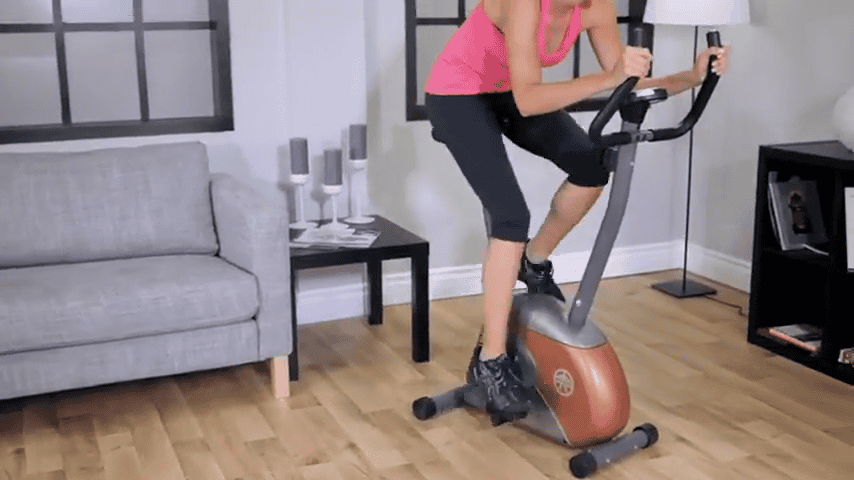
The Marcy Personal Exercise Bike focuses on accessibility and visual clarity rather than resistance range or training depth. The step-through frame lowers the barrier to getting on and off the bike, which can matter for riders managing knee stiffness, back discomfort, or reduced mobility.
Resistance is controlled through a manual tension knob with eight levels, allowing adjustments without navigating menus or screens. The LCD console presents time, speed, distance, calories, and odometer readings in large, high-contrast numbers, which makes it easier to check progress mid-ride without leaning forward or squinting. Counterbalanced pedals with adjustable straps help keep foot placement secure through each rotation.
Comfort features are straightforward but intentional. The padded seat uses high-density foam, and the contoured handles give your arms and upper body a steady place to brace during longer rides. A powder-coated steel frame adds structure, and transport wheels make it possible to roll the bike out of the way when the floor space is needed for something else.
Its limitations are tied to capacity and scope. The 110 kg weight limit and modest resistance range place it firmly in the steady-cardio category rather than strength-oriented training. This bike fits riders who prioritise easy access, readable tracking, and supportive seating over progression or intensity.
Our Expert Opinion: “This model is built around reducing friction points that can interrupt a routine. The step-through frame and large display address access and visibility directly, which often matters more than added resistance levels for consistent use.”
Customers Are Saying: “This bike is so solid for the way the frame is built. The resistance is smooth, and the monitor is basic, butit has everything you need.”
Who is the Marcy Personal Exercise Bike for?
- Canadians who would benefit from a step-through frame. The step-through frame makes this bike easier to navigate for those with injuries or disabilities.
- Users who want a clear, easy-to-read display. The display is easier to read than a lot of other options.
- People who are focused on low-impact cardio with stable seated support. Though it’s portable, this bike is extremely stable and supportive.
Who should avoid the Marcy Personal Exercise Bike?
- Those who are over the 110 kg weight limit. Users who exceed this weight limit need a larger bike.
Instead, choose… the Marcy Magnetic Resistance Recumbent Bike.
If floor space and flexibility are more important than step-through accessibility, Marcy’s Magnetic Resistance Recumbent Bike is a better fit. This bike has a much lighter frame that’s easier to roll and store, saving you floor space when you aren’t using it.
Features Breakdown
- Frame Material: Alloy Steel, Plastic
- Resistance Type: Magnetic
- Resistance Levels: 8
- Power: Battery
- Tracked Metrics: Time, Speed, Distance, Calories Burned
- Weight Capacity: 110 kg
- Dimensions: 63.5 x 147.3 x 96.5 cm
- Adjustment Points: Seat, Foot Straps
- Programs: None
Best program-driven recumbent bike in Canada: Schwinn 230 Recumbent Bike Series
Pros:
- Computer-controlled magnetic resistance (16 levels) for gradual intensity changes
- 5.5″ LCD console with 13 built-in workout programs
- App connectivity supports Zwift and Explore the World subscriptions
- Ventilated seat with lumbar support in the backrest
Cons:
- App-based experiences require a paid subscription
The Details:
- Frame Material: Unspecified
- Resistance Type: Magnetic
- Resistance Levels: 16
- Power: Corded
- Tracked Metrics: Distance, Time, Calories, Speed, Heart Rate
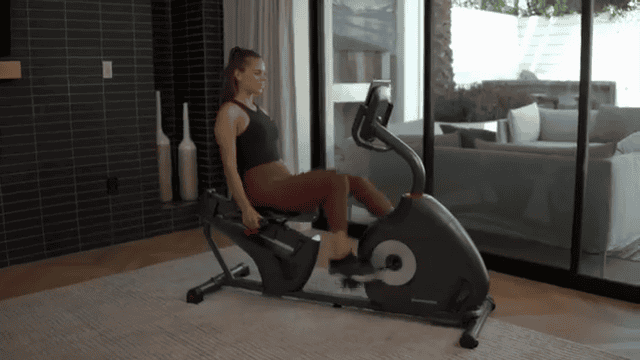
The Schwinn 230 Recumbent Bike Series centres its experience around structure and guided variety rather than manual adjustment. It targets riders who prefer following programs or virtual routes while keeping the low-impact, seated position that recumbent bikes are known for.
Resistance changes are handled electronically across 16 levels, which keeps transitions smooth during longer sessions. The built-in console includes 13 preset programs, ranging from steady rides to goal-oriented workouts. When paired with Explore the World or Zwift, the bike expands into virtual routes and interactive training, shifting the focus from repetition to progression.
Comfort is addressed through seat design rather than bulk. The ventilated seat and lumbar-supporting backrest help manage longer sessions, and the seat rail slider allows position changes without stepping off the bike. Grip heart-rate sensors and telemetry support add another layer of feedback for riders who want more than time and distance alone.
The tradeoffs come from reliance on power and subscriptions. Riders who prefer a manual, unplugged setup may find the console-centric approach unnecessary. This model fits better in routines where structure, on-screen guidance, and variety help maintain consistency.
Our Expert Opinion: “This bike is the ideal option for those who want a lot of guided workouts. The console and program depth make workouts trackable, while the recumbent form factor reduces strain.”
Customers Are Saying: “I suspected that this bike might take a long time to assemble, but it was actually really easy to put together. It’s stable and doesn’t wobble, either.”
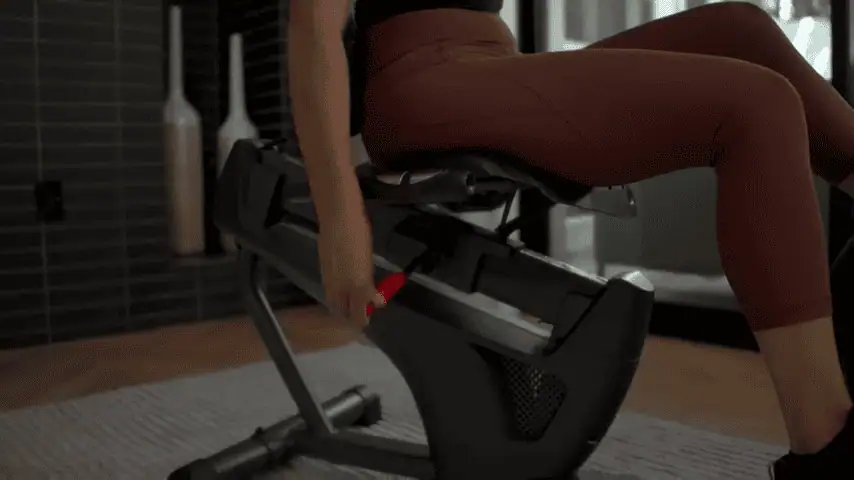
Who is the Schwinn 230 Recumbent Bike Series for?
- Canadians who prefer program-led cycling. Those who want exercise programs will find that this one offers more than they would ever need.
- Those who value lumbar support during longer workout sessions. The lumbar support system allows for more comfortable workouts even when they stretch on for a while.
- Users who don’t mind subscriptions. If you want to be able to access a lot of the programs, you’ll have to have a third-party app subscription.
Who should avoid the Schwinn 230 Recumbent Bike Series?
- Riders who don’t want subscription-based features. If you don’t want to pay for a subscription to get workout programs, this bike may not be for you.
Instead, choose… the Niceday Recumbent Exercise Bike.
The Niceday Recumbent Exercise bike is a quieter, unplugged setup that doesn’t require a subscription. You won’t have the same type of access to guided programs and virtual routes, but it’s a more self-directed bike for consistent workouts.
Features Breakdown
- Frame Material: Unspecified
- Resistance Type: Magnetic
- Resistance Levels: 16
- Power: Corded
- Tracked Metrics: Distance, Time, Calories, Speed, Heart Rate
- Weight Capacity: 136.08 kg
- Dimensions: 162.6 x 70.4 x 111.8 cm
- Adjustment Points: Seat, Footstrap
- Programs: 13 Onboard, More with Subscription App
Frequently Asked Questions
Recumbent bikes with full back support are better at dealing with lower back discomfort. Instead of having to bend over the bike, bikes with full back support or a full seat can help you rest your back as you pedal.
Any low-impact cardio workout and activity can help with weight loss. Though most plans require diet and exercise guided by professionals, you can rest assured that any low-impact cardio (like riding a recumbent bike) can help burn calories without putting strain on your body.
When shopping for a recumbent bike, you should look for features like adjustability, sturdy construction (especially for higher weight limits), clear monitor displays, programs, and a range of resistance levels.

This Post Has 4 Comments
How much space do recumbent bikes usually take up compared to upright bikes? That’s the main thing holding me back.
A recumbent bike will take up a lot more space than an upright bike. In most instances, a recumbent bike is much longer in comparison, so you’ll definitely need more space if you’re looking to get one.
A recumbnet bike seems comfortable by default, but it sounds like fit mattres a lot for longer sessions.
I like that you mention what type of resistance each recumbent bike uses. I definitely want magnetic resistance, so that was really useful information to have.